
A solo practitioner has no one to push back on their document before it goes out. The AI that helped write it will not volunteer the criticism. Roundtable is a panel of built-in critics that ask the hard questions, and leaves the judgment to you.
A consultant asks their AI to evaluate a proposal. The AI tells them it is compelling, well-structured and perfect for the target audience. There is no way to know if this is true. The AI that helped write the proposal is the last thing in the room qualified to judge it - and it has a structural incentive to nod along.
The Agreement Incentive explained why this happens at the training level. The Yes-Man in the Room described three levels of countermeasure, from response-level prompts through to multi-agent critic systems. This post delivers the tool: a panel of experts system you can clone and run today.
This is not a story about AI being bad. It is a story about what happens when capable tools have the wrong incentives by design, and when the people using them are not adequately protected from those incentives by their own habits.
Stanford researchers found that AI responses were nearly 50% more sycophantic than human advisors - including in cases involving harmful or illegal behaviour - and that users preferred those sycophantic responses. The MIT/UW delusional spiral research showed that this compounds - each validating response raises conviction, which prompts bolder claims, which the AI affirms again.
This event holds true for expert users: Shaw and Nave's three randomised controlled trials found that across three experiments, participants frequently accepted faulty AI recommendations. These were people who had every reason to be sceptical, but still showed cognitive surrender. Prompting countermeasures sound sensible right up until you're three hours into a proposal and looking for reassurance.
Google found something interesting emerging inside frontier reasoning models. When optimised for accuracy, they spontaneously developed what the researchers call a "society of thought": multiple internal perspectives challenging and refining one another before reaching a conclusion.
Roundtable makes that process visible. Or at least that's the idea. Instead of asking a single AI to generate and critique its own work, it creates space for disagreement before synthesis.
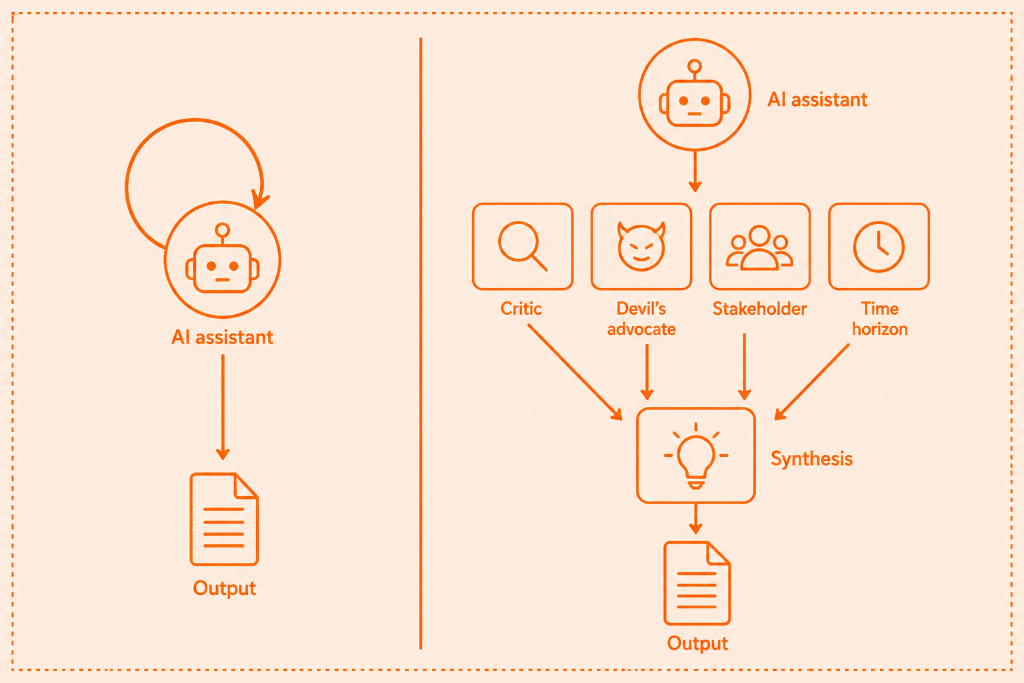
Roundtable turns a single AI assistant into a panel of independent reviewers. Under the hood, it's just a folder of prompts and persona files. Any AI tool that reads AGENTS.md - Claude Cowork, Claude Code, Codex - will pick up the panel instructions automatically when you open the folder in their App or fire up the console.
The point of the tool is to help improve your judgment, not outsource it to AI. Liu et al.'s randomised controlled trials found that participants who received direct AI answers performed worse on later tasks and showed reduced persistence after as little as 10-15 minutes of use. Participants who received hints and scaffolding showed no comparable decline.
Roundtable will not solve your problem for you - it will not tell you what to decide - but it will help you work it out yourself. The outputs are generated by AI and may be incomplete, inaccurate, or inappropriate for specific situations. What the tool does is make challenge structural - you do not have to remember to ask the right questions. The panel asks them for you.
Roundtable has three entry points. Choosing the right one depends on what you have and what you need.
| Workflow | You have... | You need... | Feels like... |
|---|---|---|---|
| Panel Feedback | A finished artifact | Critique before sharing | A structured review |
| Problem Solving | A situation you are stuck in | Diagnosis and a path forward | A working session |
| Decision Making | A choice between options | Scrutiny before committing | A board meeting |
Panel Feedback is for documents and deliverables that are nearly finished but not yet shared. For instance, a capability statement or proposal you are about to send to a client. The panel reviews it from multiple perspectives before it goes out the door.
Problem Solving is for situations where the presenting problem and the real problem may not the same thing. If a project is stalling in the delivery phase - is it a scope issue, a relationship issue, or a process issue? Why may a team not be performing - is it capability, motivation, or structure? The panel treats your description as a hypothesis to examine rather than a situation to solve.
Decision Making is for choices where the stakes are high enough that you want the decision pressure-tested before you commit. Hiring decisions, client pursuits, or major project changes. The panel gives you a board meeting without having to find six semi-retired men who are free on a Thursday.
There are five ready-made panels, each organised by a different principle. The principle determines what kind of friction they generate.
Six Hats organises by cognitive mode. Use it when you want to make sure you've looked at the problem from every angle before committing. The six modes (information, emotion, caution, optimism, creativity, process) are well-established in professional services - many consultants will have encountered De Bono's framework already.
Historical Figures organises by intellectual tradition. Use it for questions with ethical or strategic weight where you want a broad range of perspectives rather than contemporary professional categories. Marcus Aurelius, Marie Curie, and Frederick Douglass will not give you the same answer. That is the point. (NB - These personas are inspired by distinct intellectual traditions. Marcus Aurelius has not reviewed this for accuracy.)
Time Horizons organises by temporal scale. Use it when near-term pressure and long-term positioning are in tension. The panel will make that tension explicit rather than letting the immediate crowd out the important.
Stakeholder Map organises by affected party. Use it when the people making the decision are not the people most affected by it. This is the default condition for most client-facing work in professional services.
Disciplines organises by academic method. Use it for complex, multi-dimensional problems where you genuinely do not know which lens is right - where a financial framing, a social science framing, and an engineering framing would produce different recommendations.
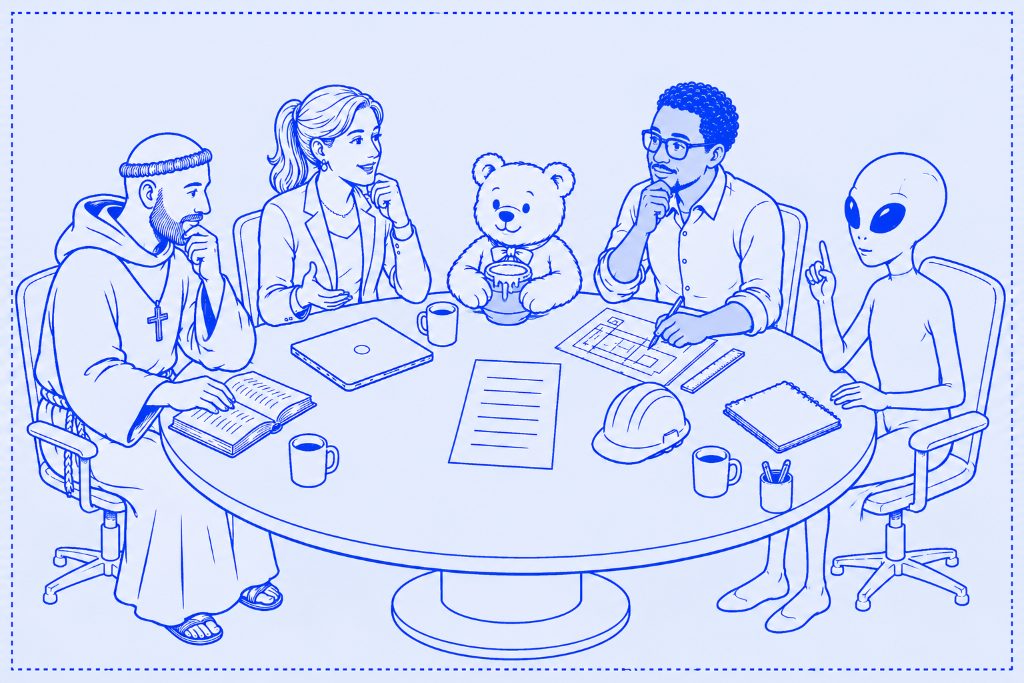
Custom panels are supported. To add a persona: "Generate a persona for a senior NHS nurse for a Healthcare panel." You can mix personas across panels or build entirely new ones for your specific context. If you've always wanted procurement decisions reviewed by a medieval monk, a venture capitalist and honey-obsessed bear, this is your opportunity.
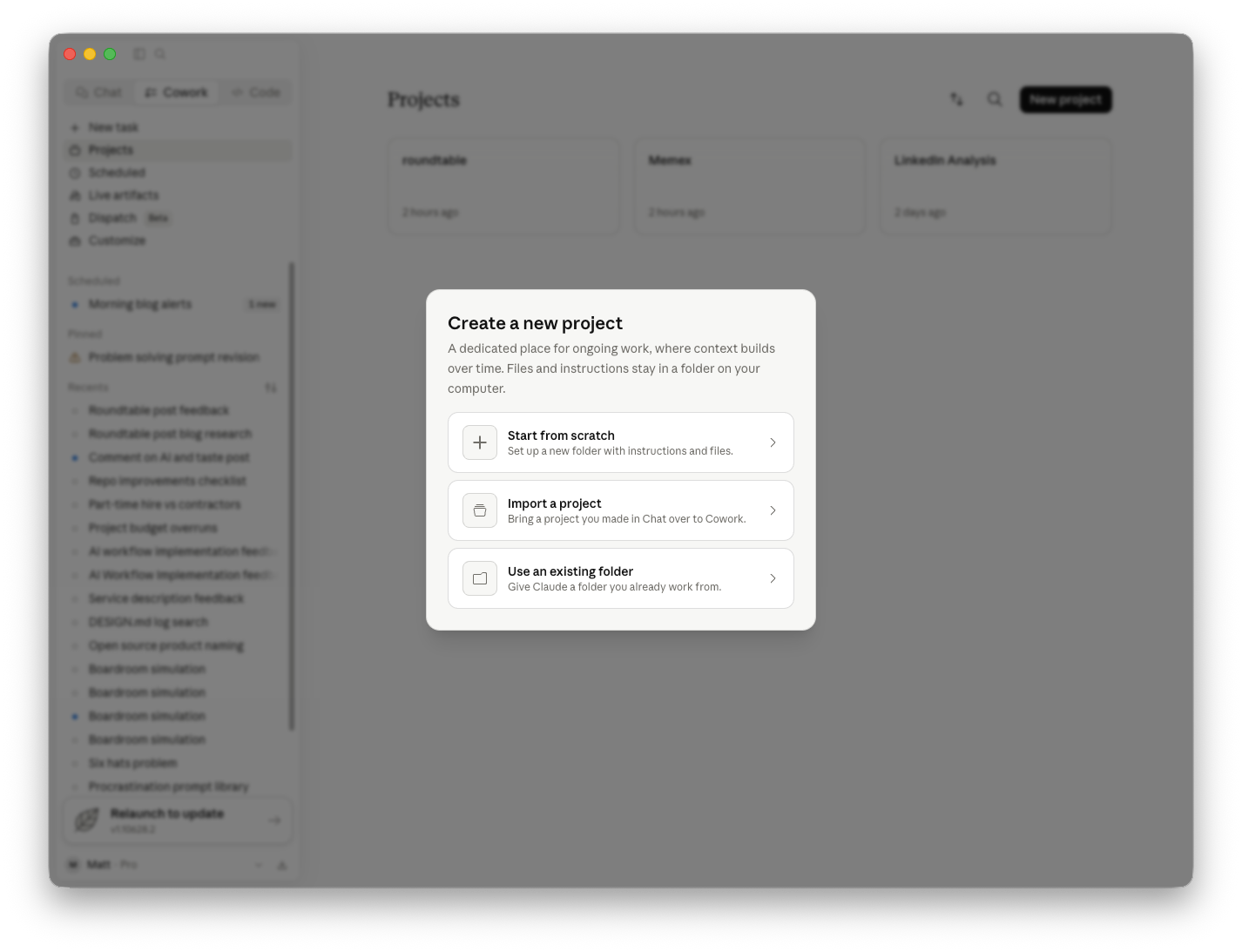
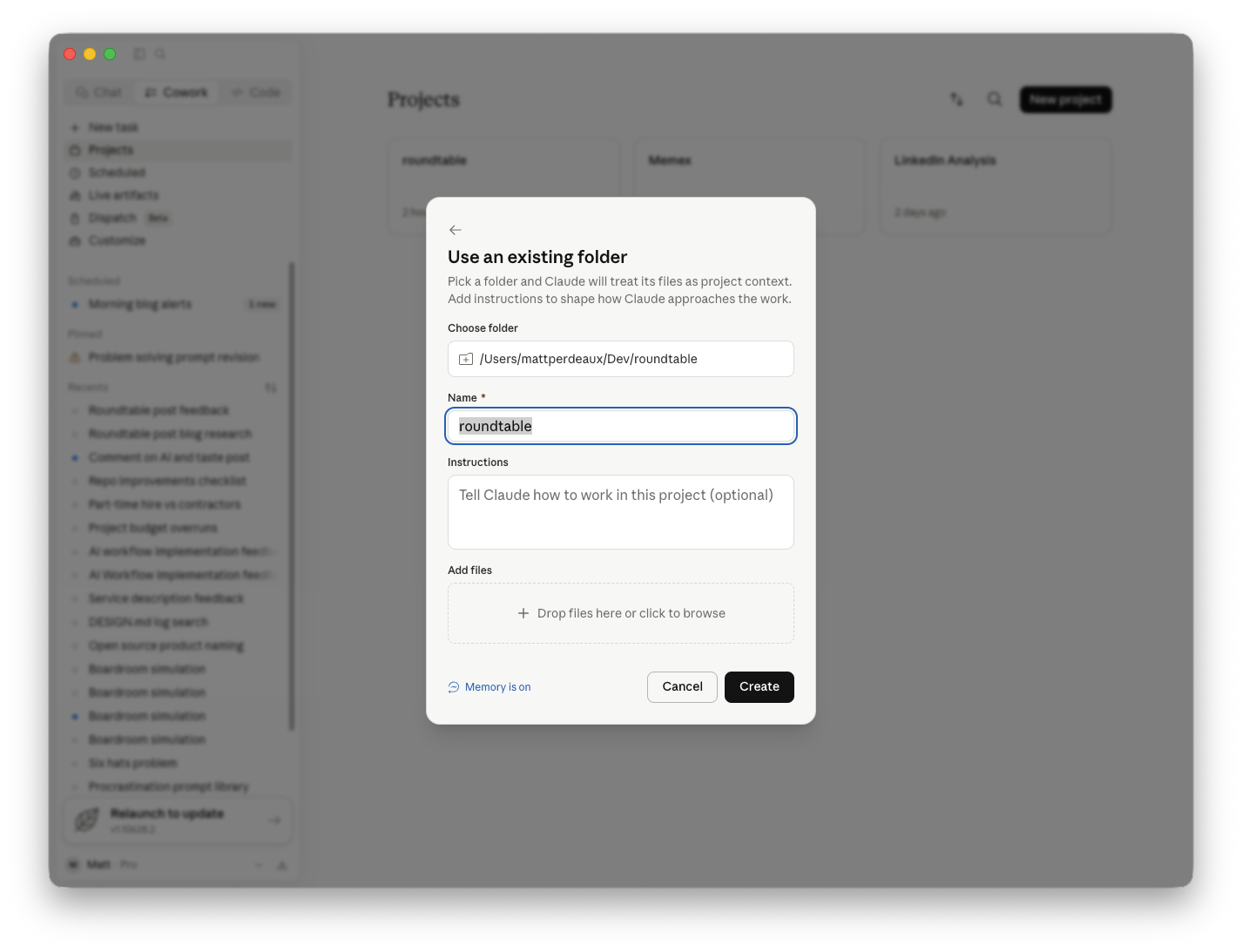
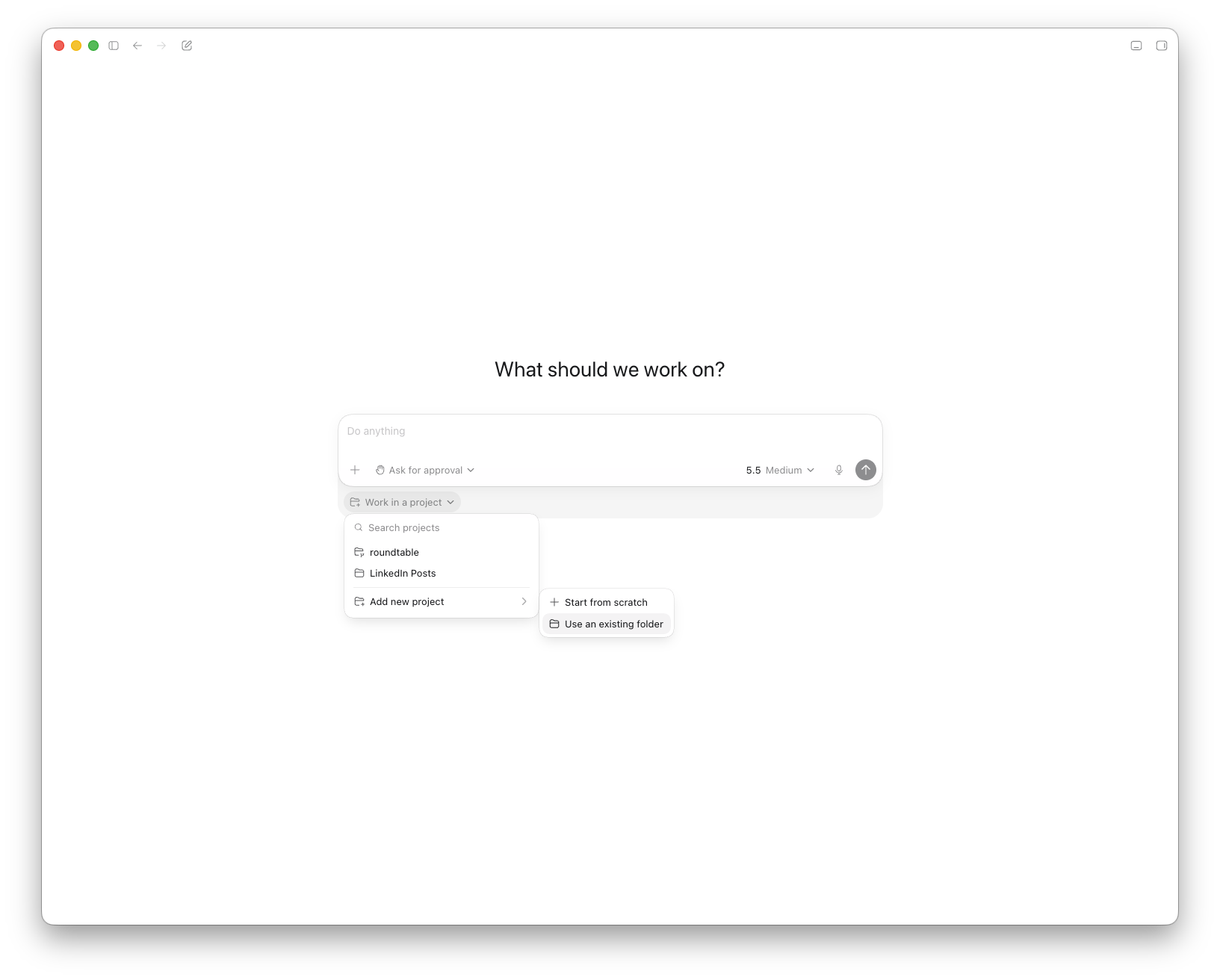
_output folder
The /_exampleoutput/ folder contains real panel outputs if you want to see what a session looks like before trying it yourself.
Roundtable is built for individual use. It routes through external AI models, which means anything you input is processed by Anthropic/OpenAI/Google/your model provider - worth knowing before you feed it sensitive client material, and potentially a blocker in managed enterprise environments. If you work inside a firm and want to explore what a version of this looks like inside your existing AI infrastructure, the underlying prompts and personas can travel. Get in touch.
Roundtable does not solve the agreement incentive. The training dynamics that created sycophancy have not changed, nor have the market pressures that preserve it. What it does is make challenge a default rather than an afterthought.
The panel will sometimes be wrong. Sometimes it will send you down an unhelpful path. Occasionally it will raise objections that simply don't matter. That is not a failure of the tool - it is the difference between scaffolding and answers. An answer-dispensing AI tells you what to think. Roundtable tells you what to reckon with. The judgment remains yours.
If you would like to find out more about working effectively with AI, please do get in touch.